
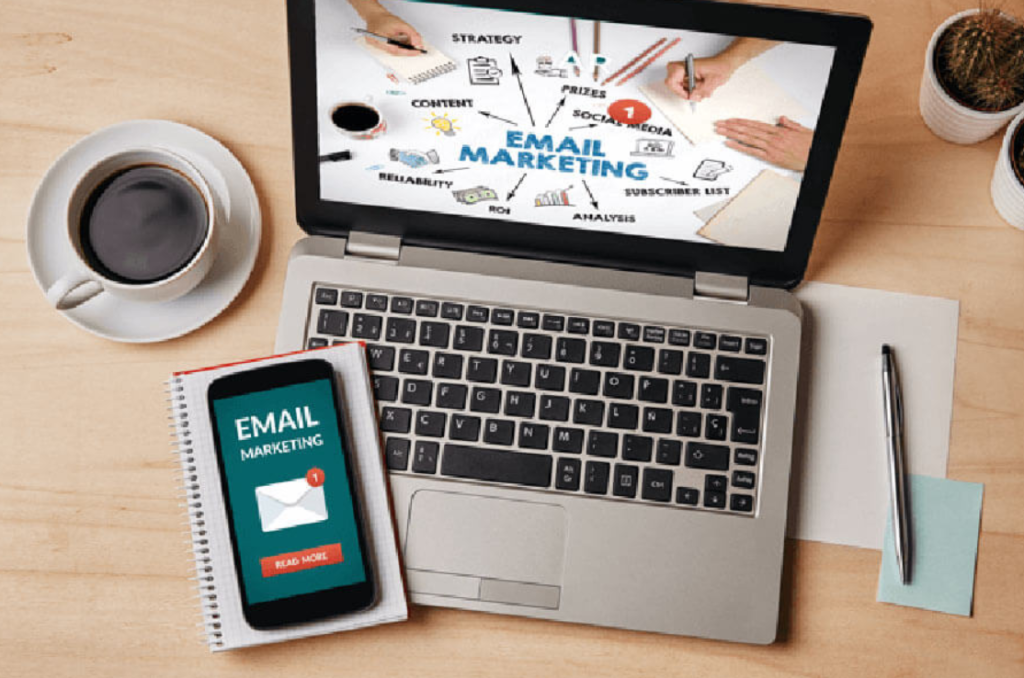
It appears straightforward when you receive a slick marketing email: a brand sent a message, and you read it. However, the behind-the-scenes action is far more complicated. Working together in exact coordination are strategy, technical infrastructure, data analysis and creative production in email marketing initiatives. Whether an email reaches the inbox or the spam folder and whether it converts is determined by scores of decisions, ranging from list hygiene and segmentation to A/B testing and deliverability monitoring. It is imperative for enterprises running campaigns to comprehend this unnoticed mechanism in order to enhance their results. Many businesses depend on specific platforms that take care of the technical complexities. Deliverability, automation features, and the extent of analytics are influenced by the choice of Email Marketing Service Providers. These important things that occur in every successful email marketing campaign are highlighted in this guide.
Permission Management and List Building
No email marketing begins without a list. Under UK GDPR, buying lists is illegal and ruins deliverability. Marketers organically construct lists in the background via lead magnets (free ebooks, discounts), event registrations, in-store collections (with permission), and website sign-up forms. A recorded source and timestamp of consent must be present for every email address. Double opt-in (verifying through a follow-up email) is ideal. Additionally, marketers automatically handle bouncebacks and unsubscribes. A small list of engaged subscribers is preferable to a large one that is uninterested. Those who do not reconfirm interest are removed from regular re-permission campaigns, which ask inactive subscribers to do so. This cleanliness stops spam complaints and maintains a positive sender reputation.
Dividing Audiences to Ensure Relevance
Sending the same email to everyone will not yield a high level of engagement. Marketers split their list into groups based on behaviour, demographics, and preferences behind the scenes. Past purchasers (send cross-sell offers), cart abandoners (send a reminder with a discount), new subscribers (send a welcome series), inactive users (send a re-engagement campaign), and location-based groups (send local event invitations) are examples of common segments. RFM analysis (recency, frequency, monetary value) is used in advanced segmentation. For instance, high-value clients who made purchases within the previous 30 days are given VIP previews, while lapsed high-value clients receive a “we miss you” offer. Frequent segmentation increases open and click rates by a factor of two.
Writing Preheaders and Subject Lines
The subject line is the first thing a recipient sees, and it’s frequently the only thing they see. Data analysts and copywriters work together behind the scenes to experiment with many different variations. Curiosity gaps (You won’t believe what’s inside), urgency (Final hours: 20% off), personalisation (John, your cart is waiting), and specificity (3 tips for better sleep) are some examples of successful formulae. Additional space is offered via preheaders (the short text that appears after the subject line in most inboxes). Before emailing the complete list, marketers run A/B testing on subject lines for small sample segments. Open rate, click-to-open rate, and spam complaints are some of the metrics that are followed. Thousands more conversions may come from a 1% rise in open rates.
Planning for Accessibility and Mobile Devices
More than 60% of emails are viewed on mobile devices. Designers employ responsive templates that reorganise content for small displays behind the scenes. Large buttons (at least 44×44 pixels), fonts 14px or bigger, and single-column designs. They stay clear of intricate nested structures and wide tables that might break in Gmail or Outlook apps. Accessibility considerations include plain text versions, enough colour contrast, and alt text for graphics (for screen readers). Nowadays, a lot of brands incorporate designs that are appropriate for dark mode. Tools for testing replicate how an email appears on more than 90 different email clients and devices. An email that appears perfect in Mac Chrome may be unreadable in Outlook 2016 for Windows.
Automating Triggered Sequence
Birthday offers, abandoned cart reminders, post-purchase follow-ups, and welcome emails are not sent manually. Marketing automation systems use triggers to operate behind the scenes. A trigger is a particular user action, such as joining up, clicking on a link, making a purchase, or failing to open an email for 30 days. After activation, the platform sends a pre-written email either immediately or after a predetermined pause (e. g., 24 hours after abandonment). Branches are possible in automation processes: if the recipient clicks link A, send follow-up X; if they click link B, send follow-up Y. Automated emails are contextually relevant and hence regularly outperform batch-and-blast campaigns. Although they need some early strategic planning to set up, these workflows operate mostly hands-free once they are.
Conclusion
A complicated system of list hygiene, segmentation, subject line testing, mobile design, automation, deliverability management, performance analysis, and legal compliance underlies every successful email marketing campaign. The eight points above show that effective email marketing is a strategic discipline that requires technical, creative, and analytical skills, not just sending an email. Collaborating with experienced Marketing Service Providers provides companies without internal capabilities access to enterprise-grade tools and experience. You may ask better questions, interpret data correctly, and constantly enhance results by understanding what goes on behind the scenes, whether you manage campaigns yourself or outsource them. Amateur email marketing is extinct, but email is still alive and well. Invest in the magic behind the equipment.
Visit Koalageddon for more informative blogs.